
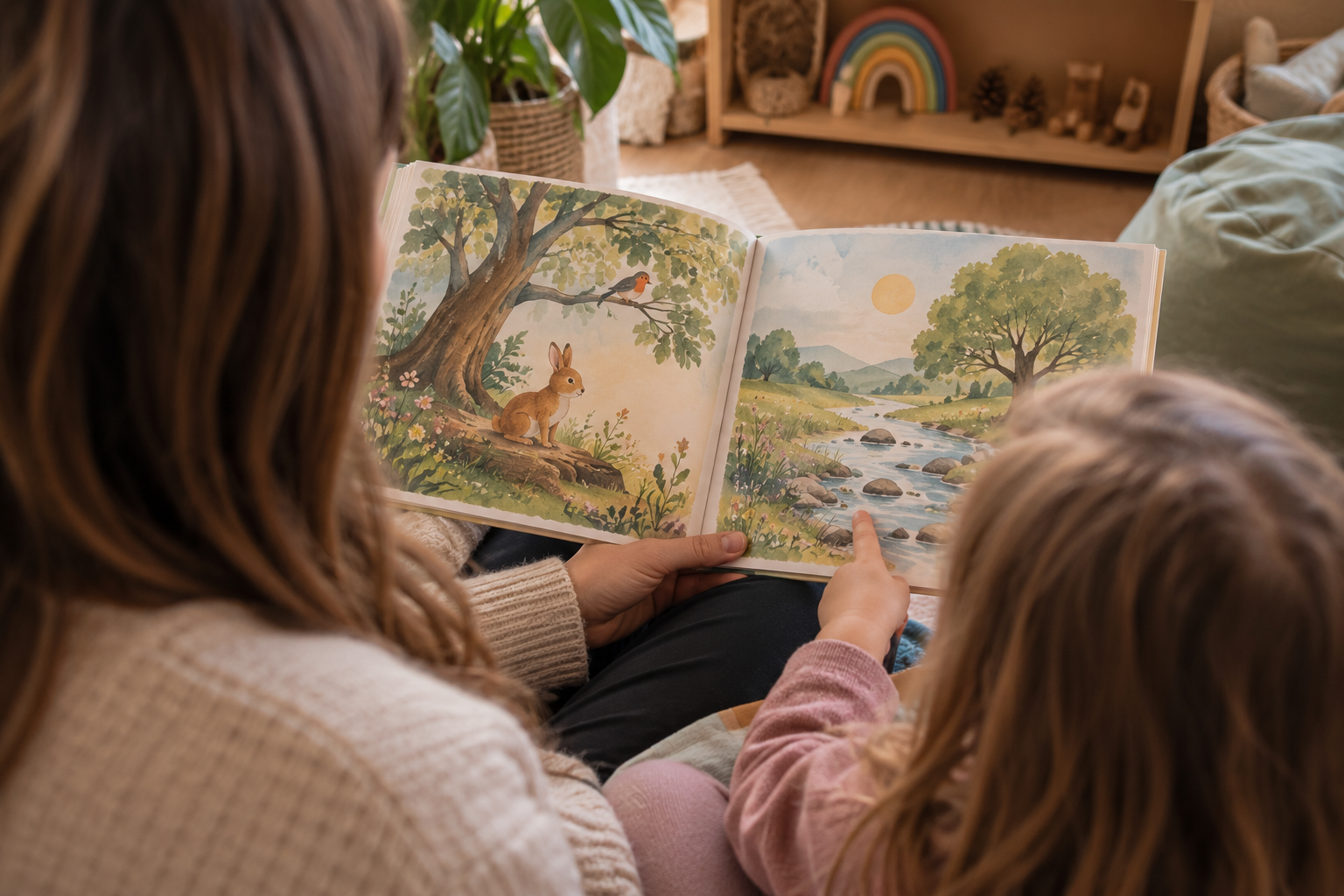
Therapeutic Storytelling for Children
Helping children explore feelings and experiences through the safety of story and metaphor
Stories can offer children a gentle and creative way to explore emotions, experiences and challenges that may be difficult to express directly.
At Little Buds Creative Therapies, therapeutic storytelling can be used alongside play and other creative approaches to support children to explore their inner world in a way that feels safe, imaginative and appropriate for them.
What is therapeutic storytelling?
Therapeutic storytelling uses stories, characters, imagery and metaphor to help children explore feelings and experiences without necessarily having to talk about them directly.
For a child, saying “I feel worried”, “I'm angry” or “this happened to me” can sometimes feel difficult or overwhelming.
A story can create some distance.
Instead of talking directly about themselves, a child may be able to explore the experiences of a character, an animal or an imaginary world.
Through metaphor, themes and feelings can be explored gently, allowing the child to engage with the story in their own way and at their own pace.

Why use stories therapeutically?
Children naturally make sense of the world through play, imagination and stories.
A character facing a storm, searching for somewhere safe, feeling different from everyone else or learning to trust again can provide a way of exploring experiences without placing pressure on a child to explain or disclose their own.
A therapeutic story isn't about telling a child what they should think or feel.
Instead, it can create possibilities for exploration, reflection and meaning-making.
Stories may help children to:
explore and recognise different emotions
make sense of experiences or changes
explore worries and fears at a safe distance
develop emotional language
consider different perspectives
discover their own ideas and possibilities
explore themes of resilience, connection and hope
The meaning a child takes from a story is their own.
Storytelling within Play Therapy
As a Certified Play Therapist, my practice is informed by the PTUK Integrative Holistic Model of Play Therapy.
Within this model, therapists draw upon a range of play and creative arts media and work with both conscious and unconscious processes.
Storytelling and metaphor can form part of this creative therapeutic process, alongside approaches such as art, sand play, puppets, creative visualisation, movement, music and other forms of imaginative expression.
A story may emerge naturally through a child's play, be created together within a session, or, where therapeutically appropriate, I may create or introduce a story containing metaphors and themes relevant to the child's needs.
The child remains at the centre of the process. There is no expectation that they interpret a story in a particular way or explain what it means to them.
What might therapeutic storytelling look like?
There isn't one set way to use therapeutic storytelling.
A child might create their own character or imaginary world, use puppets or figures to develop a story, draw scenes or characters, create a story together with me, or listen to a carefully considered therapeutic story.
Stories can also be combined with other creative media such as drawing, painting, clay, sand, movement or music.
This allows each child to engage in a way that feels comfortable and natural to them.
Who might therapeutic storytelling support?
Therapeutic storytelling may be helpful when a child is finding it difficult to express or make sense of what they are experiencing.
This might include children experiencing anxiety or worries, bereavement and loss, changes within the family, difficulties with friendships, low confidence or self-esteem, emotional regulation difficulties, transitions or other significant life experiences.
However, therapeutic storytelling isn't based simply on a particular diagnosis or difficulty.
Every child is different, and any therapeutic approach I use is considered in relation to the individual child's needs, developmental stage and therapeutic process.
Stories created with your child in mind
Where appropriate, I can create therapeutic stories around themes that may be relevant to an individual child's experiences.
These stories use metaphor rather than simply retelling what has happened to the child.
This allows difficult feelings or experiences to be held within the safety of an imaginative story, giving the child space to connect with it — or not — in their own way.
The aim isn't to provide a lesson or tell the child how their story should end.
Instead, therapeutic storytelling can open a creative space in which new possibilities, feelings and meanings can emerge.
Therapeutic Storytelling in Norwich and Norfolk
I offer therapeutic storytelling as part of my child-centred therapeutic work with children and young people in Norwich and across Norfolk.
It can be used within play therapy and alongside other creative therapeutic approaches depending on the individual needs of the child.
If you're wondering whether therapeutic storytelling or Play Therapy might be appropriate for your child, you're welcome to get in touch for an initial conversation.